


Yoram Friedman MD
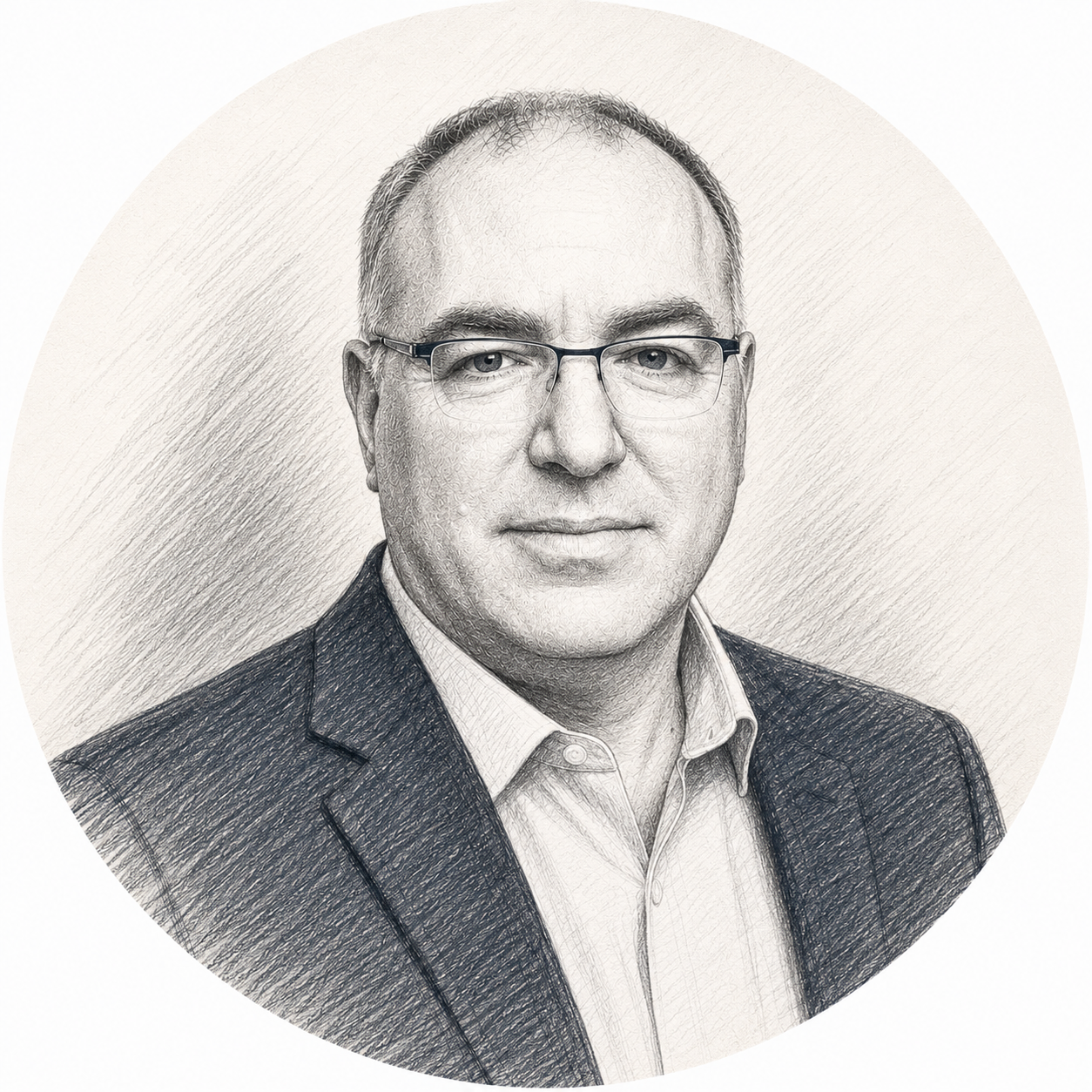
Sketch portrait of Yoram Friedman

Yoram Friedman, MD

AI product management · Enterprise leadership

Career experience

AI product
leadership.

I build enterprise AI and data platforms, lead product teams, and bring clinical judgment to complex decisions.

Today, I lead product areas for SAP’s Business AI Platform. My experience spans SAP, Walmart, Microsoft and digital health—from defining the roadmap to helping people use and trust what we build.

15+

Years in enterprise product
SAP, Walmart, Microsoft & digital health

6–8

PMs in the global teams I led
Walmart · Director of Product Management

40,000+

Learners reached
Through a co-created OpenSAP course

01 / Product leadership

Complex platforms. Practical outcomes.

Enterprise data, cloud infrastructure and digital health. Concrete product responsibilities, across strategy, teams, delivery and adoption.

SAP

Enterprise data & AI

Making business data usable for AI.

I lead product areas spanning developer experience, extensibility, data products and governance for SAP’s Business AI Platform.

I define product priorities and work across teams on how data products are consumed, extended and governed. Earlier, I brought SAP Connected Goods from concept to an enterprise IoT platform.

Walmart

Director of Product Management

Building the team behind the platform.

I built and led a global team of six to eight product managers and defined the multi-year roadmap for a multi-cloud platform across private cloud, Azure and GCP.

The remit connected provisioning, automation and governance with engineering delivery, reliability at peak retail events, and organizational adoption.

Hello Heart

Digital health

Connecting clinical workflows and product decisions.

As the sole product manager, I worked across patient and clinician experiences and payer integrations for a regulated remote cardiac monitoring platform.

The work spanned patient and clinician workflows, eligibility, claims and incentives. My clinical experience brings domain knowledge to decisions involving clinicians, patients and healthcare organizations.

Applied AI

Independent experimentation

Putting agentic AI frameworks into practice.

I maintain my own AI testing environment, building supervised agents with local and frontier models. I evaluate models, tools, and technologies against real workflows to understand where AI adds value and where human judgment remains essential.

This hands-on work puts my frameworks to the test across the full agentic lifecycle: defining the problem, designing the workflow, evaluating behavior, and exploring how supervision, monitoring, and continuous improvement should work together.

02 / Expertise & perspective

Clinical knowledge. Enterprise experience. Human judgment.

My training in anesthesiology and radiology gives me direct experience of healthcare workflows, decisions under uncertainty and the consequences of getting them wrong.

I have worked as both a product organization leader and a senior individual contributor. Across those roles, I focus on the human and cultural side of change: how teams adopt new tools, where resistance comes from, and how rollouts fit real workflows.

Technology that isn’t adopted isn’t a product. It’s a cost.

Areas I work across

  • Agentic AI Product Strategy
  • Data Products & Semantic Architecture
  • AI Governance
  • Enterprise AI Adoption
  • Human-Centered Change
  • Regulated Environments
  • Healthcare AI

03 / Product management practice

A framework for the decisions
an AI product demands.

The Agentic AI PM Lifecycle: six phases, with the deliverables and questions that make them useful. Most teams enter Discover without first building AI literacy.

The Agentic AI PM Lifecycle

00

AI Literacy

A state of the organization, not a project stage. The PM enters Discover already carrying the vocabulary and mental models agent work requires.

Questions answered

  • Does this PM understand what an agent is and is not?
  • Can they tell task completion from task success?
  • Are they fluent in autonomy levels?

Deliverables

  • Literacy curriculum module
  • PM readiness attestation
  • Active community of practice
01

Discover & Decide

Decide whether an agent is the right solution before engineering begins. Most expensive failures are prevented here.

Questions answered

  • Is the problem bounded with tolerable error?
  • Will the agent receive the relationships and semantics it needs?
  • Does the math work at projected volume?
  • Should we actually build this?

Deliverables

  • Suitability record (four criteria)
  • Context sufficiency map
  • Distribution gap analysis
  • Cost model with break-even
  • Go-or-no-go memo
02

Design

Design the two products: the agent and the supervisory system. Runtime behavior engineered deliberately, not by default.

Questions answered

  • What can the agent do unilaterally, what needs approval?
  • When a human approves, what information do they see?
  • How do we reverse the agent when it is wrong?

Deliverables

  • Declared system type
  • Four runtime artifacts
  • Consequence classification
  • Trust label matrix
  • Channel 2 composition
  • Adversarial defense plan
03

Evaluate

Prove readiness through evidence. Replaces the single pass-fail gate with distribution, projection, and state-validation.

Questions answered

  • When we run the eval ten times, how often does it pass?
  • What is the end-to-end success rate, not per-step?
  • Did the target system actually change?
  • Are all four owners willing to sign?

Deliverables

  • Pass@K with variance
  • Compound probability projection
  • Semantic-vs-state validation
  • Coverage statement
  • Adversarial suite results
  • All-owner readiness memo
04

Observe

Measure what the agent is actually doing in production. The continuous front end of Operate.

Questions answered

  • Did the agent do what the user intended?
  • Did it act outside its declared boundary?
  • Are humans still supervising or nodding along?
  • Is it calibrated, or confidently wrong?

Deliverables

  • Six observation instruments
  • Deployment-event log with re-baselining
  • Supervised vs bypass report
  • Supervisory engagement metrics
  • Stratified performance report
05

Operate & Retire

Act on what Observe is showing. Governance runs at runtime. Drift, silent degradation, and retirement are named stages.

Questions answered

  • Is the agent still doing the thing it did at launch?
  • Has the model underneath shifted?
  • Are rules running at runtime or in review meetings?
  • Can we produce the full decision history?

Deliverables

  • Drift detection (four vectors)
  • Tiered post-release checkpoints
  • Constitutional runtime rules
  • Adaptive governance rule set
  • Authority delegation chain audit
  • Affected-person audit view

Observe and Operate form a continuous loop: one measures what happens; the other responds. This framework underpins the series, the articles and the SAP Community posts, and can support multi-session PM upskilling.

Explore the framework in the book

04 / Frameworks & mental models

Ideas that sharpen product judgment.

Nine of the 50+ named models developed across my writing—covering data context, supervision, autonomy and the gap between a model’s answer and a product’s outcome.

01

The Iceberg

You moved the data. The meaning stayed behind.

02

The Coverage Gradient

Regulatory intensity tracks clinical claims, not patient risk.

03

Criterion 4 Failure Mode

The framework assumes someone is watching.

04

Trained on the Wrong End of the Story

The model learned the end. It is deployed at the beginning.

05

Intelligence Without Context

Intelligence without context is just confidence.

06

Agent-Based Experience (ABX)

Design for one customer and forget the other. It fails.

07

Two-Channel Agentic Design

Most PMs design Channel 1. Channel 2 is the supervisor.

08

The Supervision Paradox

Oversight without understanding isn’t safety. It’s sign-off.

09

Earned vs. Scheduled Autonomy

Earned, not scheduled. Expand the boundary on evidence, not the calendar.

Browse the full library

05 / Teaching & impact

Making product knowledge useful to others.

I speak and teach on enterprise data, AI architecture and product strategy. A co-created OpenSAP course reached more than 40,000 enterprise practitioners.

40,000+learners · co-created OpenSAP course

Selected speaking and teaching platforms

  • SAP SAPPHIRE
  • SAP TechEd
  • Microsoft TechEd
  • OpenSAP

Available for selected speaking engagements, podcasts and advisory discussions on agentic AI product design, governance in regulated environments, and the changing relationship between medicine and AI.

06 / Books & writing

The thinking, developed further.

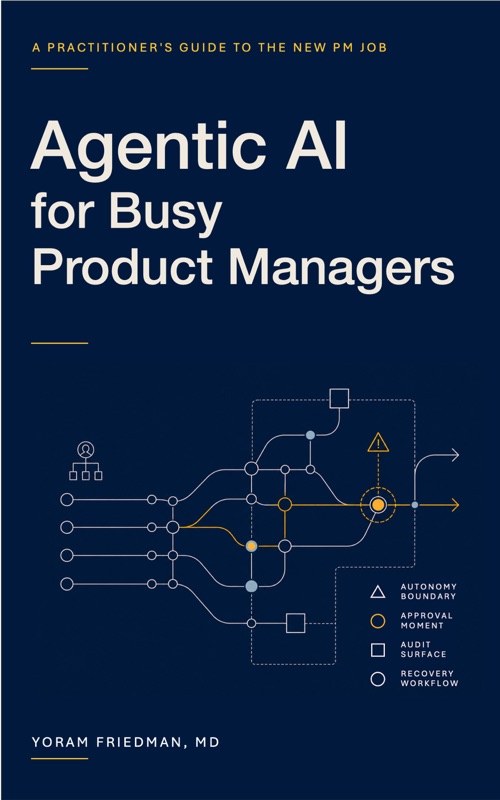
My product frameworks continue in the five-book Agentic AI Series, alongside writing on medicine and authorship. The series is free to read online; print and Kindle editions are available on Amazon.

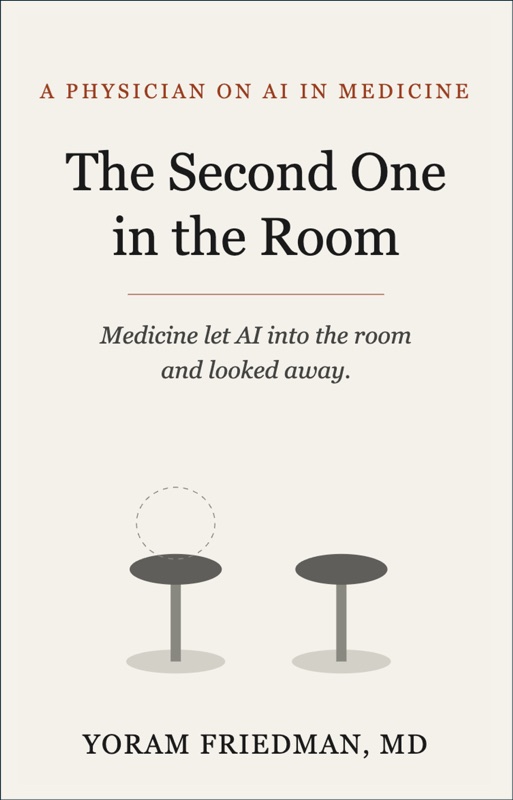
The Second One in the Room book cover

On medicine

The Second One in the Room

What medicine is risking by letting AI into the room.

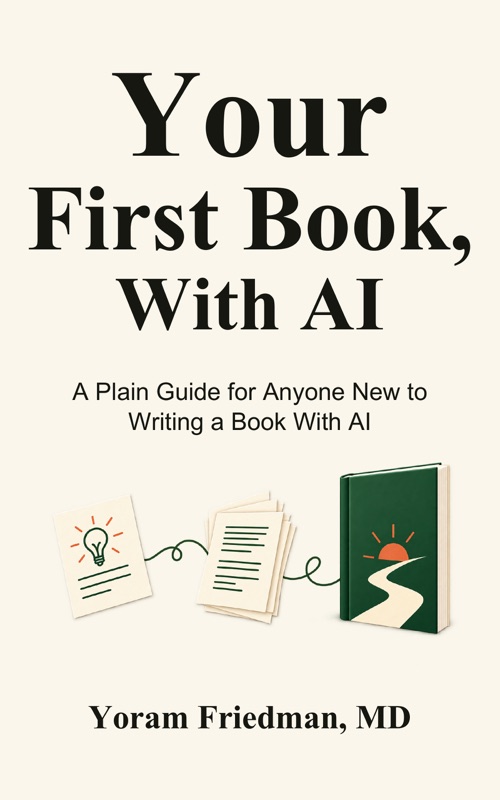
Your First Book, With AI book cover

On writing

Your First Book, With AI

A plain guide to writing your first book with AI.

Forthcoming

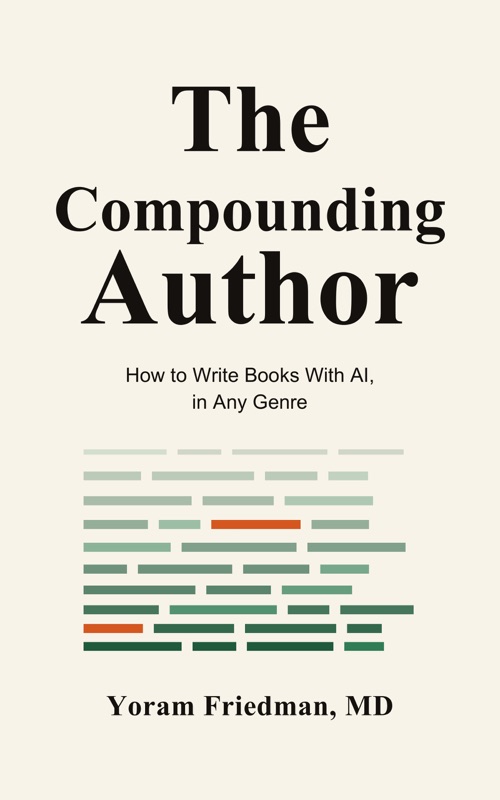
The Compounding Author

Coming October 15.

Build the agent. Then build the system that supervises it.

A five-book arc: the PM lifecycle, product failures, team responsibilities, human judgment and product leadership. Written for teams shipping AI where being wrong has consequences.

The Second One in the Room

Medicine’s professional wall was doing two jobs: controlling who got in, and quietly governing the care inside. AI has dissolved the wall, and almost no one has noticed the second job went with it.

07 / Practical resources

Writing and tools for the work itself.

Data, Decisions, and Clinics

100+ articles on healthcare AI, enterprise data architecture, regulation and the work of moving AI from pilot to production.

Read the writing

From framework to working practice

A companion skill package for the agentic PM lifecycle, 55 interview questions answered from the product seat, and focused whitepapers.

Let’s talk

Lead the product.
Bring people with it.

I welcome conversations about lead PM and product leadership roles in enterprise AI, data platforms and healthcare, alongside selected teaching, speaking and advisory work.